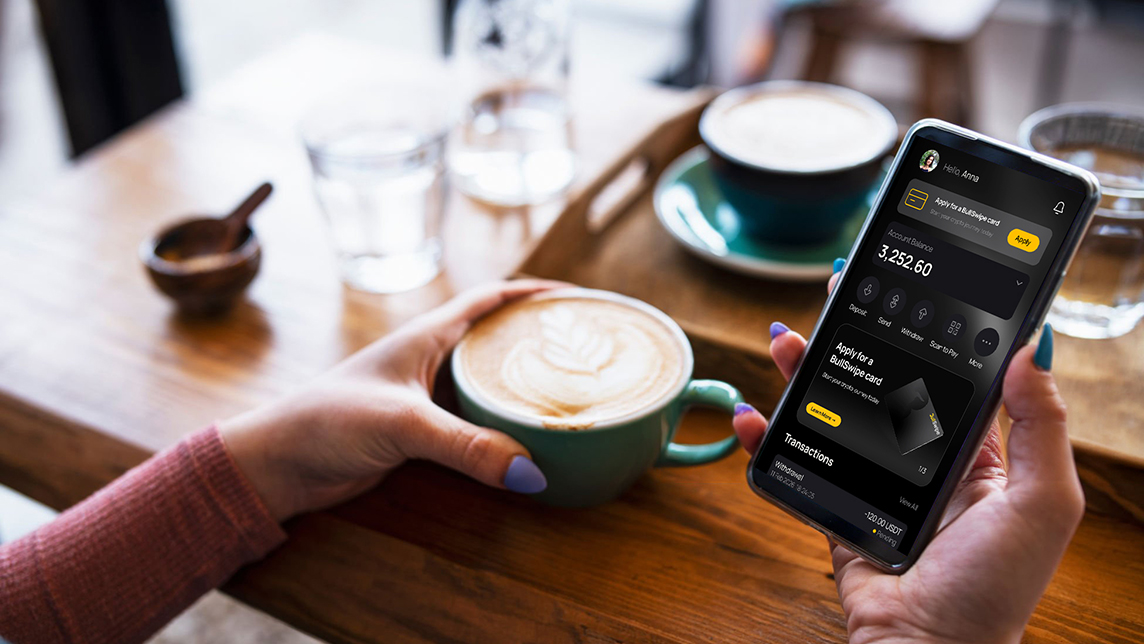



Cross-border living is no longer unusual.
As of February 2026, more than 48 jurisdictions worldwide offer digital nomad or remote work visas and permits, according to EY’s Global Immigration Index. Europe accounts for 40% of those programs, followed by the Americas at 29%, Asia-Pacific at 19%, and Africa and the Middle East at 12%. At the same time, Deel says it analyzed more than one million worker contracts across 37,000 companies in 150-plus countries in its latest global hiring report. Taken together, those signals point to the same reality: more people now live and work across borders as part of ordinary professional life.
However, the financial experience for cross-border residents remains unnecessarily complex. While international work has become more seamless, moving money remains challenging. Deel’s data shows that contractors in high-inflation markets often select USD or stablecoins instead of local currencies to protect their earnings. Countries such as Argentina, Cameroon, South Korea, Türkiye, Vietnam, and Tajikistan have the highest stablecoin adoption among contractors on the platform. This indicates that cross-border workers seek not only faster payments but also ways to preserve the value of their income.
For cross-border residents, financial friction continues after income is received. Everyday expenses — such as paying rent in a different currency, renewing subscriptions, or making purchases abroad — often incur additional fees. DBS reports that overseas card transactions can result in foreign transaction charges of up to 3.25%. Stripe notes that dynamic currency conversion transactions frequently include exchange-rate markups and bundled fees, with European consumers paying between 2.6% and 12% more. These costs are often hidden at the point of earning and only become apparent when spending.
It is evident that the challenge extends beyond settlement — daily usability is key. The payment industry acknowledges that users must collect, hold, convert, send, and spend funds internationally. Visa’s cross-border solutions address these needs, supporting transactions in over 180 territories and more than 30 currencies. While the market recognizes the complexity of cross-border finances, the key question is whether these processes can be simplified for end users. This is where BullSwipe offers a solution.
Effective financial products integrate seamlessly into daily life — much like a wallet, phone, or keys. BullSwipe is designed with this principle in mind. Its goal is to make digital balances easy to use in standard card-based payment environments, eliminating the need for multiple apps, conversions, or manual workarounds for routine transactions. This is important because for remote workers, digital nomads, and cross-border earners, the true measure of a financial product is its ongoing usability in everyday situations.
Cross-border work is now common, but cross-border spending solutions must evolve to match. BullSwipe is being developed to address this gap.