
Working abroad while getting paid in stablecoins: a practical money checklist
Working abroad while receiving stablecoins calls for three separate plans: receiving the payment, accessing your accounts and paying for the things you need. Check eligibility, supported assets and networks, mobile-wallet requirements and backup payment methods before relying on one service. Travelling to a country does not establish your account eligibility there.
By BullSwipe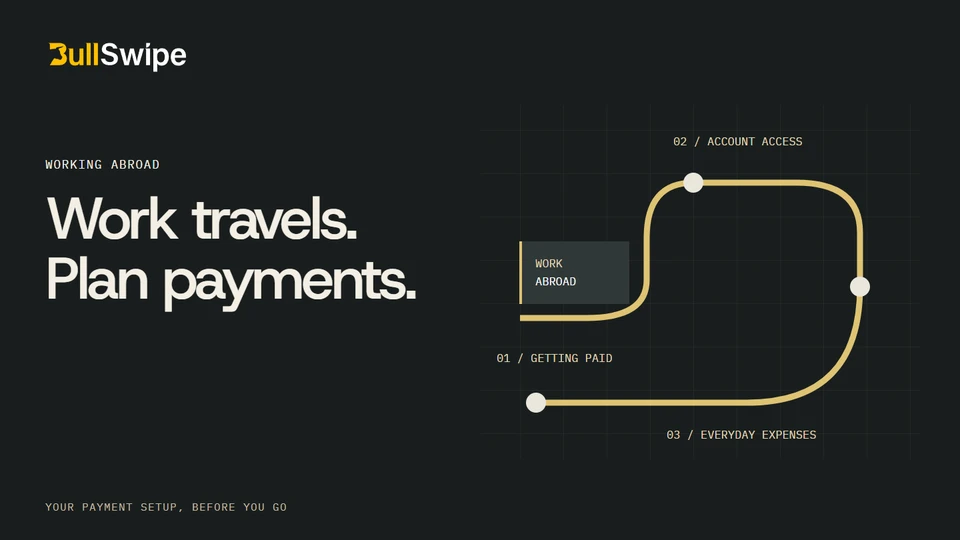
Your work may fit in a laptop bag. Your payment setup still needs some preparation. A client can send a payment while you are away, but you also need a usable way to pay for accommodation, food and the next part of the trip.
Start with the expenses you expect
Make a short list of essential payments. Record how each recipient accepts payment and when it is due. Ask an accommodation provider about its check-in and deposit requirements rather than assuming the payment method used for the booking will cover everything.
A virtual card can be one part of the plan. It does not establish that every merchant or type of purchase will accept it. Keep an alternative payment method available for expenses that your intended card or wallet cannot cover.
Separate your account circumstances from your destination
Check the eligibility requirements that apply to you. Being physically present in a destination is not the same as meeting a provider's account or residency requirements.
BullSwipe's country checker separates virtual-card availability from Apple Pay and Google Wallet support. An Available result is not an account-approval guarantee. If you are unsure which country information applies to your circumstances, ask support before funding the account for a trip.
Make the payment agreement portable
Before you leave, confirm the asset, network and destination for any expected client payment. Save the agreed details and the invoice reference in a place you can access securely.
If you change a receiving address during the trip, confirm the change with your client through a trusted channel. Check that your receiving service permits that kind of payment. Do not send a client an address simply because the app displays the same token name.
Check your phone and account access
If you plan to pay with a mobile wallet, check the provider's device, card and country requirements as well as BullSwipe's own availability information. Apple and Google publish separate wallet-support guidance.
Make sure you can access the email address and authentication methods used by your accounts. Keep recovery information private and separate from anything you intend to share with a client or support team. Save the official support route before you need it.
Understand what your spending balance represents
BullSwipe converts supported USDT or USDC into a USD-denominated balance for virtual-card spending. That balance and a stablecoin held in another wallet are different parts of your payment setup.
Read the spending explanation before depending on it. For a transfer to another wallet, use the crypto withdrawal guide. Do not assume a crypto withdrawal is a bank transfer.
Keep a plan for interruptions
Before the trip, check these four things:
- Essential expenses have a confirmed payment method.
- Expected payments have agreed token and network details.
- You can recover account access through the provider's official process.
- A backup payment method is available if your phone, connection or primary service is unavailable.
For the card-specific checks, continue with Using a virtual card abroad. A useful travel plan covers both getting paid and being able to pay.